
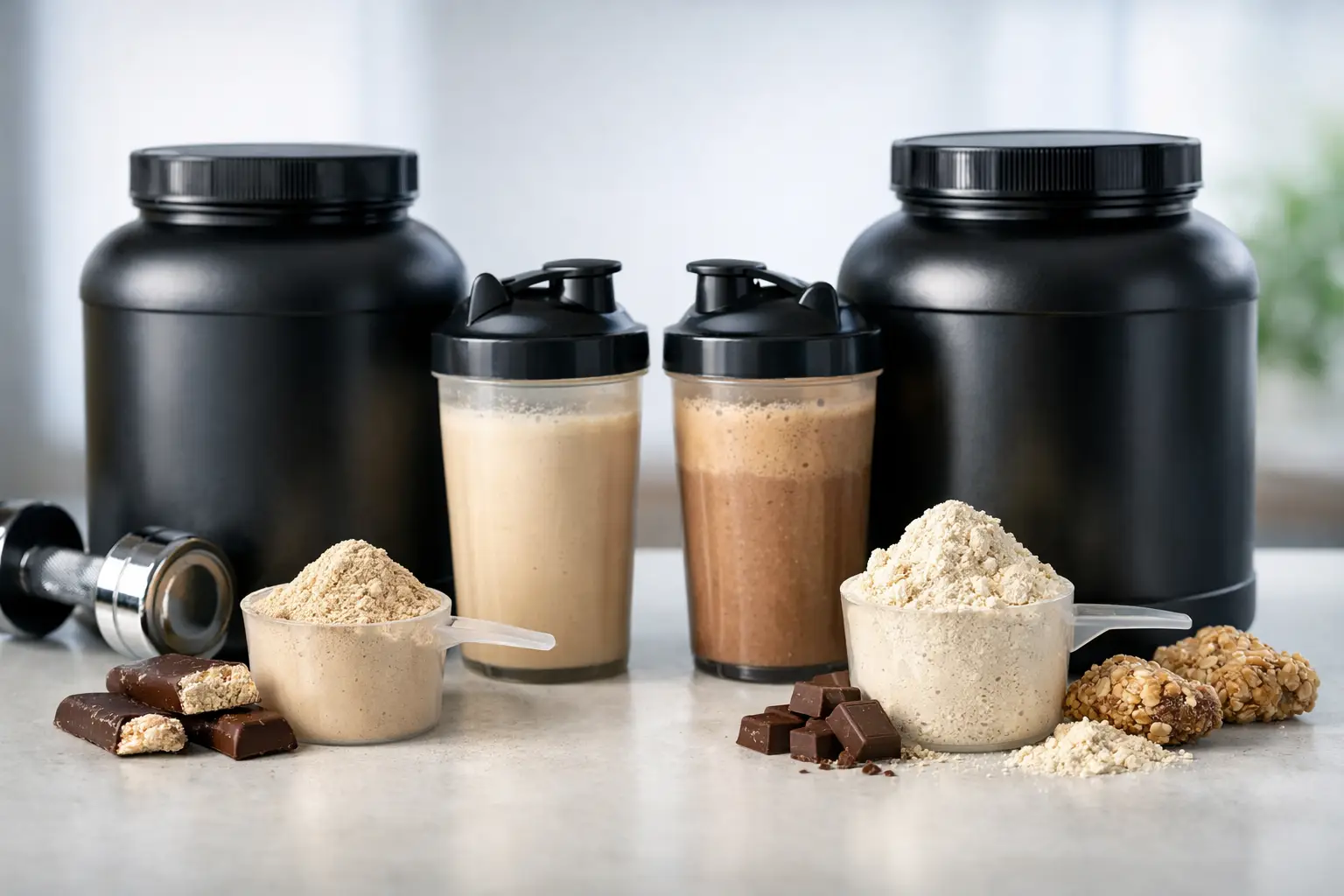
Protein Powder vs Mass Gainer: Which Fits?
You have finished a hard session, your meals are mostly on point, but the scales have not moved for weeks. That is where the protein powder vs mass gainer decision becomes practical rather than theoretical. Both can support muscle gain, but they solve very different problems. One makes it easier to hit protein. The other makes it easier to hit a calorie surplus.
Choosing the wrong one will not ruin your progress, but it can make your plan more expensive, less convenient and harder to stick to. If your goal is size, strength and consistent progress, match the product to the gap in your diet.
Protein Powder vs Mass Gainer: The Core Difference
Protein powder is primarily a high-protein, relatively low-calorie supplement. A typical whey shake may provide around 20-30g of protein for roughly 100-150 calories when mixed with water. It is designed to support daily protein intake without adding a major amount of carbohydrate or fat.
A mass gainer is a calorie-dense shake built for people who struggle to eat enough. Depending on the serving size and how it is mixed, it can provide several hundred calories, substantial carbohydrate and a meaningful amount of protein. Some formulas are straightforward blends of whey and carbohydrate sources, while others include fats, creatine, digestive enzymes or added micronutrients.
The short version is simple: protein powder helps you hit your protein target; a mass gainer helps you hit your calorie target while also contributing protein. Neither is automatically better. Your food intake, appetite, activity level and rate of weight gain decide which makes sense.
When Protein Powder Is the Better Buy
Protein powder is the stronger everyday option for most gym-goers. Building muscle requires adequate protein, but piling calories into your diet when you do not need them can lead to faster fat gain than you want. A whey concentrate, isolate or blended protein makes it easy to add quality protein around training, at breakfast or between meals without turning every shake into a full meal.
It is particularly useful if you are maintaining your body weight, dieting, recomping or gaining slowly. Someone aiming to add muscle while keeping their physique tight may need an extra 25g of protein after training, not an extra 800 calories.
Protein powder also gives you more control. You can add it to porridge, yoghurt, pancakes or a smoothie and decide exactly how many calories you want alongside it. Mix it with water for a leaner shake, or use milk, oats, fruit and nut butter when you need more energy. That flexibility matters if your calorie needs change between a gaining phase and a cut.
For many lifters, daily protein intake is best spread across meals. A shake is not superior to chicken, eggs, Greek yoghurt, fish, tofu or lean beef, but it is fast, portable and predictable. When work, travel or a late session gets in the way, that convenience helps keep the basics covered.
How much protein do you need?
For resistance-trained people, a sensible starting point is around 1.6-2.2g of protein per kilogram of body weight per day. If you weigh 80kg, that works out at roughly 128-176g daily. You do not need to chase the top end if you are already progressing well, eating enough calories and recovering properly.
Use your normal food first, then use protein powder to close the gap. If your meals already deliver enough protein, another shake is optional rather than essential.
When a Mass Gainer Makes Sense
Mass gainers earn their place when food volume is the real issue. Hard gainers are not a special biological category, but some people genuinely burn through calories quickly, have demanding physical jobs, play sport several times a week or simply get full before they can eat enough to gain weight.
If you are training hard, your body weight has been stable for two to three weeks and you know you are not eating in a surplus, a mass gainer can be a highly practical tool. Liquid calories are often easier to get down than another large plate of rice, mince and vegetables. A shake between meals or after training can add the energy required to move the scales.
Mass gainers can also work well for tall, active lifters, students with hectic schedules and athletes in a high-volume training block. The key is using one to support a solid diet, not replace it. You still need proper meals for fibre, micronutrients, food variety and long-term appetite management.
Start with a half serving if you are new to gainers. Full servings can be very large, and taking one on top of an already high-calorie diet is an easy way to overshoot. Aim for a modest surplus, often around 200-400 calories above maintenance, then track your average body weight and gym performance for a couple of weeks.
If body weight is rising rapidly but your waist measurement is moving faster than your lifts, reduce the serving size or frequency. Muscle gain is not a licence to eat without a plan.
Calories, Carbs and Ingredient Quality
Not all gainers are built alike. Look beyond the headline calorie number. Check how much protein you receive per serving, where the carbohydrate comes from and whether the serving size is realistic for your stomach and routine.
Some mass gainers lean heavily on fast-digesting carbohydrate sources. That can be useful around demanding training or for those who need quick, convenient calories, but it is not always the best fit if you prefer slower-digesting meals and steadier energy. Others use oats, different carbohydrate blends or added fats to push calories higher.
A gainer with 1,000 calories may sound impressive, but it is only useful if you can digest it comfortably and consistently. If a product leaves you bloated, kills your appetite for meals or makes you skip food later in the day, the total calorie benefit may be smaller than it appears.
Protein powders have ingredient differences too. Whey concentrate is generally a reliable, cost-effective choice for most people. Whey isolate is usually lower in lactose and can offer a higher protein percentage, making it useful for those who want fewer calories or find concentrate does not agree with them. Vegan blends based on pea, rice or other plant proteins can also support muscle gain when total protein and calories are adequate.
Build Your Own Gainer or Buy One?
A ready-made mass gainer wins on speed. Scoop it, shake it, drink it. That is valuable when you are trying to eat 3,500-plus calories, rushing between work and the gym, or tired of preparing extra meals.
A homemade gainer gives you tighter control over ingredients and can be easier to adjust. Protein powder blended with milk, oats, banana and peanut butter can deliver a serious calorie hit while letting you alter the carbohydrate, fat and protein to suit your target. It can also be a smart option if pre-made gainers feel too sweet or too heavy.
There is no purity contest here. Use the option you will actually take consistently. The best mass-gain shake is one that helps you reach your calorie target without causing digestive issues or pushing out quality meals.
Common Mistakes That Slow Progress
The biggest mistake is buying a mass gainer before checking whether you really need more calories. Many people assume they are eating loads because they eat until full at dinner, yet their overall intake across the week is still too low. Track your food for a few typical days before making the call.
The opposite mistake is relying on protein shakes while expecting the scales to rise. Protein supports recovery and muscle protein synthesis, but it does not create a calorie surplus by itself. If you are under-eating, a lean shake will not solve the problem.
Another issue is treating supplements as the programme. Progressive training, enough sleep and consistent meals remain the drivers. Creatine monohydrate can be a worthwhile addition for strength and performance, but it does not replace the fundamentals either.
Finally, do not judge your plan from one weigh-in. Take several morning measurements per week, use the average and assess it alongside strength levels, progress photos and how your clothes fit. Day-to-day water, carbohydrate and salt changes can hide what is really happening.
Make the Choice Based on the Gap
Choose protein powder when protein is difficult to reach, calories are already where they need to be, or you want a versatile shake that works through gaining, maintenance and dieting phases. Choose a mass gainer when you have confirmed that your calorie intake is too low and eating more whole food is not realistic every day.
For plenty of lifters, the answer changes over time. A straightforward whey may cover your needs for most of the year, while a calorie-dense gainer becomes useful during a demanding bulk, a busy work period or a phase where appetite is low. Train hard, monitor the data and use the supplement that makes your next week of progress easier to deliver.
About author

Add comment