
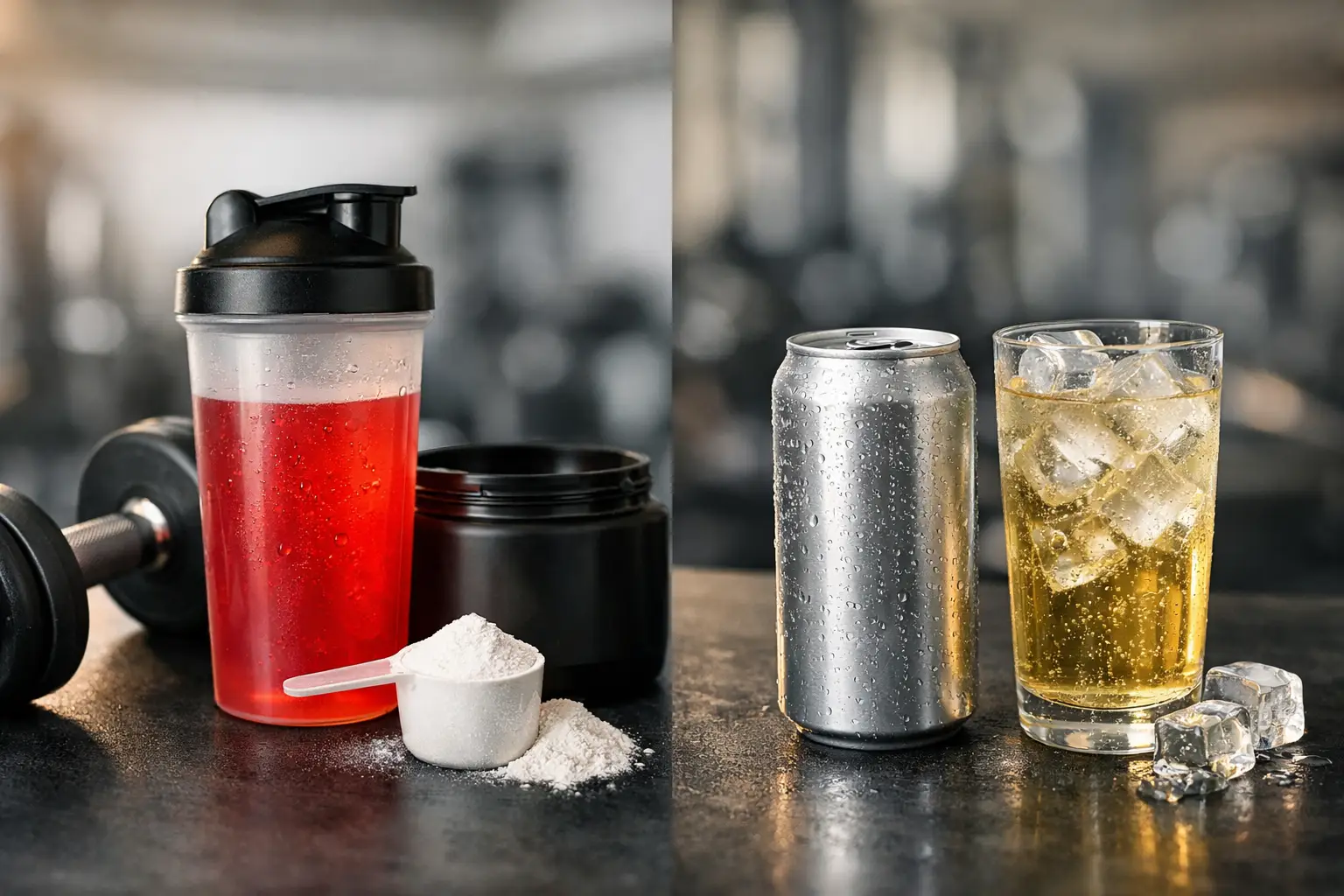
Pre Workout vs Energy Drink: Which Wins?
You feel flat at 5pm, training starts at 6, and the quickest option is whatever is cold, fizzy and caffeinated. That is usually where the pre workout vs energy drink question starts – not in theory, but on the way to the gym. Both can give you a lift, but they are not built for the same job, and using them interchangeably is where a lot of people waste money or miss performance.
Pre workout vs energy drink: the real difference
At a glance, both products seem to do the same thing. They can raise alertness, increase energy and make a session feel more manageable. But a pre-workout is formulated around training output, while an energy drink is usually built around general stimulation and convenience.
That distinction matters. If your goal is simply to stay awake for the drive home, an energy drink can do the job. If your goal is to train harder, push more volume, improve focus between sets and get a better pump, a proper pre-workout has a much stronger case.
The biggest difference is ingredient design. Most energy drinks lean heavily on caffeine, flavouring and sometimes taurine, B vitamins or small nootropic additions. Pre-workouts often go further, combining stimulants with performance ingredients such as citrulline malate, beta-alanine, tyrosine, theanine, electrolytes or pump blends. That means the effect profile is usually broader, not just stronger.
What a pre-workout is actually built to do
A good pre-workout is not just there to wake you up. It is meant to support training quality. That can mean increasing perceived energy, sharpening mental focus, improving blood flow, delaying fatigue or helping you keep intensity high when motivation is low.
Caffeine is still central in many formulas, but it is only part of the picture. Citrulline is commonly included to support nitric oxide production and pump. Beta-alanine is often used for muscular endurance, although the tingles are not a measure of product quality. Tyrosine, alpha-GPC or similar focus ingredients may be added for concentration and mind-muscle connection. In higher-stim formulas, you may also see more aggressive stimulant combinations aimed at experienced users who want maximum drive.
That is why pre-workout tends to feel more training-specific. The product is designed around what happens once the session starts, not just how you feel 20 minutes after drinking it.
Where energy drinks fit
Energy drinks win on convenience. They are ready to drink, easy to grab and familiar. If you are under-caffeinated, slept badly or need a quick boost before a lighter session, one can be enough.
For some people, that is all they want. Not everyone needs a loaded formula before training. If you are doing a short cardio session, some accessories work, or a casual upper-body day, a standard energy drink might give enough alertness without feeling overkill.
The issue is that many energy drinks stop at stimulation. You may feel more awake, but that does not automatically translate to better training performance. A can with 150-200mg of caffeine can help, but if it lacks ingredients that support pump, endurance or focus, it may leave performance benefits on the table.
There is also a cost point people miss. Buying individual cans regularly can add up quickly, especially if you train four or five times a week. Scoop for scoop, pre-workout is often better value when you look at cost per serving rather than shelf convenience.
Caffeine alone is not the whole story
A lot of gym-goers reduce this debate to caffeine content. That is too simplistic. Yes, caffeine matters. It is one of the most proven performance ingredients available. But matching caffeine milligrams does not make an energy drink equal to a pre-workout.
Take two products with 200mg of caffeine. One is a standard energy drink with taurine and B vitamins. The other includes citrulline, beta-alanine and nootropics. They may feel similar for the first lift, but the training experience can be very different across a full session.
This is also where tolerance becomes relevant. If you already drink a lot of caffeine through coffee, canned drinks and fat burners, you might need more than a basic energy hit to notice any difference in the gym. Or, just as importantly, you might need less stimulation and a more balanced formula to avoid feeling wired but not productive.
Pre workout vs energy drink for strength training
If your training is built around heavy compounds, progressive overload and longer sessions, pre-workout usually comes out ahead. Strength training benefits from focus, drive and repeatable session quality. Ingredients that support blood flow and fatigue resistance can make a difference, particularly on higher-volume days.
That does not mean every lifter needs a high-stim formula. Plenty of people do well with moderate caffeine and a solid pump blend. But if you are chasing performance rather than just a buzz, a proper pre-workout generally makes more sense than a random can from the chiller.
Energy drinks can still work in a pinch. They are just less targeted. If you train inconsistently or only want a small boost, they are serviceable. If you train seriously and expect your supplements to match that, they are rarely the best long-term option.
For cardio, sport and general gym sessions
This is where the answer gets more flexible. For lower-intensity cardio or shorter sessions, an energy drink may be enough. You might not need the full ingredient panel of a dedicated pre-workout just to get through 30 minutes on a bike or treadmill.
For harder conditioning, circuits, sport-specific sessions or anything with repeated high output, pre-workout starts to justify itself again. Endurance support, electrolytes and focus ingredients can be genuinely useful when the session demands more than basic alertness.
It depends on the goal. If you just want to feel switched on, an energy drink can be fine. If you want a supplement that is built to support output, pre-workout is the stronger tool.
Things people get wrong when choosing
The first mistake is assuming stronger is always better. A high-stim pre-workout is not automatically the best choice. If you train in the evening, are sensitive to stimulants or already consume a lot of caffeine, a lighter formula or stim-free option may suit you better.
The second is ignoring sugar and calories. Some energy drinks include a fair amount of sugar, which may or may not fit your diet phase. That is not inherently bad, but it matters if you are cutting or tracking tightly. Many pre-workouts are lower calorie, although formulas vary.
The third is double-dosing without thinking. People often take a pre-workout and then add an energy drink later in the day, forgetting total stimulant intake adds up fast. That is where jitters, poor sleep, elevated heart rate and rough training sessions start to show up.
Which is better for fat loss phases?
During a cut, energy management becomes more important because calories are lower and training can feel harder. In that situation, pre-workout often has the edge because it can help preserve session quality when energy is down.
That said, some people prefer energy drinks while dieting because they are simple, appetite-friendly and easy to fit into a routine. If your main issue is mental fatigue rather than training output, a can may be enough. If your main issue is keeping training performance high, pre-workout is usually the smarter pick.
This is where product choice matters more than category alone. A well-formulated lower-calorie pre-workout can outperform an energy drink easily. A weak underdosed pre-workout, on the other hand, may be little more than expensive flavoured caffeine.
How to choose the right option for you
Start with your actual use case, not hype. If you want convenience, portability and a basic lift, an energy drink is easy. If you want a formula built for gym performance, choose a pre-workout that matches your stimulant tolerance and training style.
Look at the label with a bit of scepticism. Caffeine dose matters, but so do the supporting ingredients and serving sizes. A decent pre-workout should tell you clearly what is in it and at what dose. With energy drinks, know whether you are paying for functionality or just branding and flavour.
It is also worth being honest about timing. If you train late, smashing a heavy stim product at 7pm can ruin sleep and hurt recovery more than it helps the session. In that case, lower-stim or stim-free pre-workout options can make more sense than either a full pre-workout or a strong energy drink.
For shoppers who want more than just a quick buzz, category choice matters. That is why serious supplement users often move from canned energy products towards dedicated pre-workouts once training becomes a priority. At SUPPS101, that difference is exactly why pre-workout ranges are split by stim level, format and training goal rather than treated as a one-size-fits-all product.
So which one wins?
If the question is general energy, the energy drink is the simpler option. If the question is gym performance, pre-workout usually wins. It is more targeted, often better value per session, and more likely to support the parts of training that actually matter once the warm-up is over.
The better choice is the one that fits your session, your tolerance and your goal. If you train seriously, pick supplements that are built for training. If you just need a quick lift now and then, convenience can be enough. Choose based on output, not just how hard the can or tub looks on the label.
About author

Add comment