
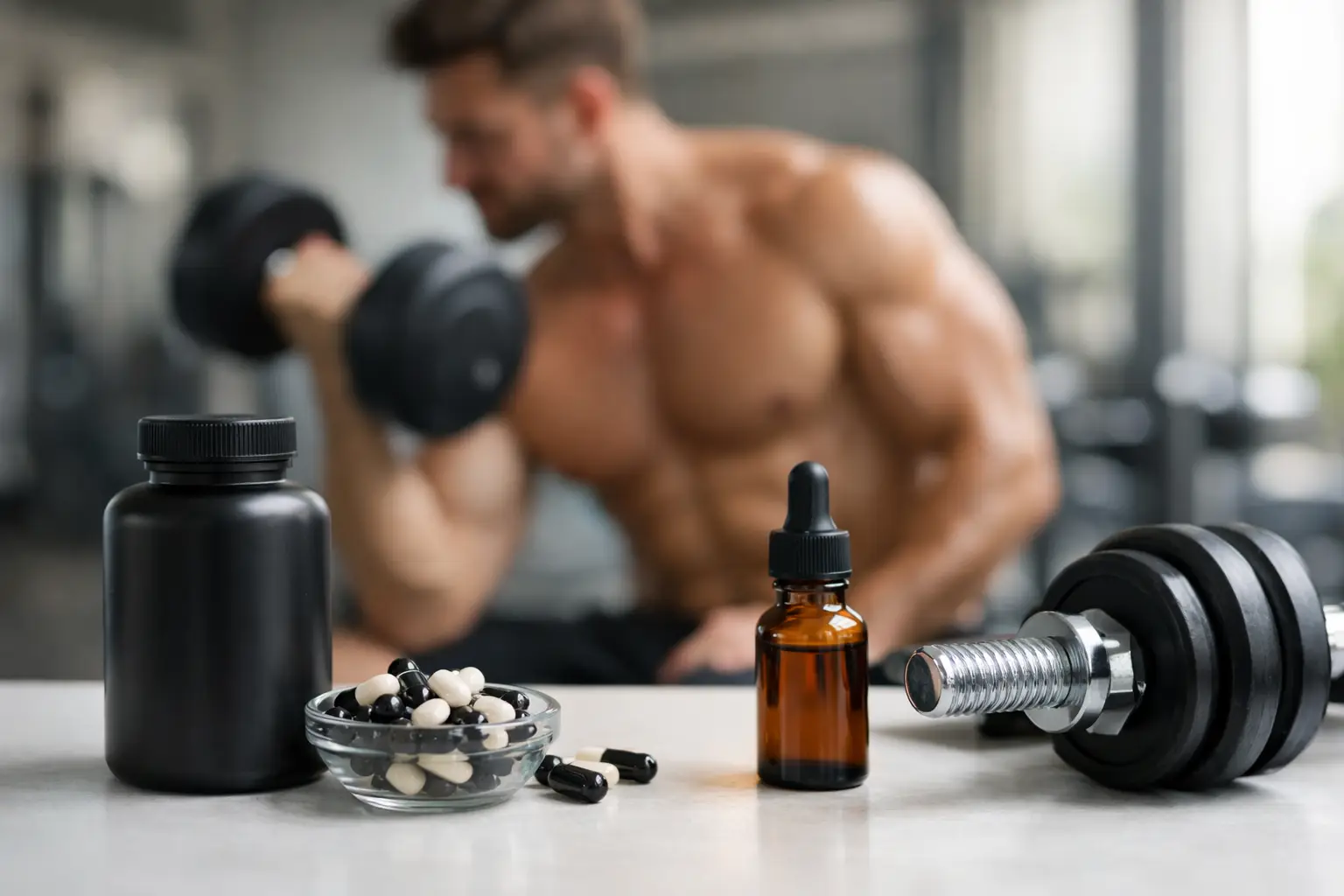
Do Testosterone Boosters Actually Work?
If you train hard, eat well, sleep decently and still feel flat in the gym, the question usually lands fast – do testosterone boosters actually work, or are they just another category with big claims and average returns? It is a fair question, especially when the market mixes serious formulations with underdosed blends, flashy labels and a lot of noise.
The short answer is this: some testosterone boosters can help in specific situations, but they are not magic, they are not a replacement for proper medical treatment, and they do not work equally well for everyone. If your testosterone is already in a healthy range, expectations need to stay realistic. If your recovery, sleep, diet and stress are poor, no capsule is going to rescue your results.
Do testosterone boosters actually work for gym performance?
For most gym-goers, the real answer sits somewhere between yes and not much. Natural testosterone boosters are typically built around vitamins, minerals, plant extracts and adaptogens that aim to support normal hormone function rather than force a huge hormonal spike. That distinction matters.
If a product helps correct a deficiency, reduce stress load, improve sleep quality or support healthy testosterone production, you might notice better energy, libido, drive and recovery. In some cases, that can translate into better training quality over time. But if you are expecting the kind of jump associated with anabolic steroids or prescription testosterone replacement therapy, you will be disappointed.
This is where a lot of buyers get caught out. The category name sounds aggressive. The actual effect is usually more subtle. For a lifter who is run down, dieting hard, sleeping badly or low in key nutrients, subtle can still be useful. For someone already dialled in, the difference may be modest.
What testosterone boosters are really designed to do
Most legal over-the-counter formulas are not designed to directly flood your system with testosterone. They are built to support the conditions that help healthy testosterone levels stay where they should be.
That often means including ingredients such as zinc, magnesium, vitamin D, ashwagandha, fenugreek, D-aspartic acid, tongkat ali or shilajit. Each has a different job. Some are linked to correcting nutrient shortfalls. Some may help with stress or fatigue. Some have limited evidence suggesting they may support testosterone or sexual health in certain groups.
That is a big difference from saying they will massively raise testosterone in every healthy male who takes them. A good formula supports. It does not perform miracles.
Which ingredients have the best evidence?
A lot of testosterone booster formulas look strong on the label but fall apart when you check dosage and ingredient quality. The better question is not just whether testosterone boosters work. It is whether the specific ingredients, in meaningful amounts, make sense.
Vitamin D, zinc and magnesium
These are among the most practical ingredients in the category. If you are deficient, correcting that can help support normal testosterone production and overall function. That does not mean taking extra on top of adequate intake will keep pushing testosterone higher and higher. It means a deficiency can hold you back.
For UK customers, vitamin D is especially relevant because low sunlight exposure across much of the year makes low status fairly common. If your levels are poor, sorting that out can be worthwhile well beyond testosterone alone.
Ashwagandha
Ashwagandha has built a strong reputation because it may help reduce stress and cortisol while also supporting performance, recovery and, in some studies, testosterone levels. It is not a cheat code, but it is one of the more credible ingredients in this space, especially for lifters dealing with high training stress, poor recovery or heavy life load outside the gym.
Fenugreek
Fenugreek shows mixed but interesting results. Some users report better libido and training drive, and some studies suggest benefits for strength or body composition. The testosterone effect is less clear-cut, but it remains a common inclusion because it may support male health outcomes people actually notice.
D-aspartic acid
This one had a lot of hype, then a more mixed reality. Some early research looked promising, especially in men with lower testosterone or fertility issues, but later evidence has not shown consistent benefits in resistance-trained men. It is not useless, but it is far from a guaranteed win.
Tongkat ali and shilajit
These ingredients have gained traction with more advanced supplement users. There is some promising research around stress, libido, wellbeing and hormone support, but quality matters massively. Poor sourcing can ruin the product. A properly built formula with quality raw ingredients stands a much better chance than a bargain-bin blend chasing label appeal.
Who is most likely to notice a difference?
The people most likely to get something from a testosterone booster are usually not the ones already operating at full capacity. They are the ones with room for improvement.
If you are dieting aggressively, undersleeping, carrying high stress, not eating enough fats or micronutrients, or you have low vitamin D or zinc status, support supplements may help bring you back towards baseline. That can feel like a noticeable improvement in mood, libido, motivation and training output.
Men with clinically low testosterone are a different case. If you genuinely have low testosterone, over-the-counter boosters are not the main play. You need proper blood work and medical advice. A supplement can support the basics, but it should not delay dealing with an actual health issue.
Women sometimes use hormone-support products too, but the aim is different and formulations should be approached carefully. This category is marketed heavily at men, and the evidence base is largely discussed in that context.
Why some people swear by them and others say they are useless
Both camps can be telling the truth.
If someone starts a decent testosterone support formula while also cleaning up sleep, eating properly, reducing alcohol, training consistently and managing stress, they may feel much better within a few weeks. The supplement may have helped. So did the behaviour changes.
On the other side, if someone buys an underdosed product, ignores recovery, sleeps five hours a night and expects a dramatic hormonal transformation, they will probably call the whole category rubbish. That is also understandable.
Supplement categories get judged by their worst products and their most unrealistic marketing. Testosterone boosters are a classic example.
What they will not do
This part matters. A natural testosterone booster will not give steroid-like muscle gain. It will not override chronic sleep deprivation. It will not fully fix low libido caused by relationship stress, depression or medical issues. It will not outwork a bad diet. And it will not replace proper diagnosis if something is genuinely off.
That does not make the category pointless. It just means you need to buy for the likely outcome, not the fantasy outcome.
For most users, the realistic upside is support for drive, recovery, libido, wellbeing and training consistency. Those are valuable benefits when they happen, but they are still support-level benefits.
How to choose a testosterone booster that is worth buying
A strong formula usually looks less flashy and more purposeful. Start with transparent labelling. If a brand hides everything behind a proprietary blend, you cannot tell whether the key ingredients are present in useful amounts.
Then look at the formula logic. Does it combine evidence-backed basics like vitamin D, zinc or magnesium with well-selected botanicals such as ashwagandha or tongkat ali? Or is it just a random mix of ingredients designed to sound intense?
Dosage matters too. A good ingredient at a token dose is there for marketing, not results. That is why experienced supplement buyers tend to focus less on label hype and more on structure, standardisation and whether the product makes sense for their goal.
At SUPPS101, the advantage of shopping a broad category is being able to compare formulas properly instead of grabbing the first product with the loudest name. In a category like this, that matters.
When lifestyle will beat any supplement
If your testosterone support stack is tight but your basics are poor, fix the basics first. Sleep is the obvious one. So is total calorie intake, especially if you have been in a long cut. Healthy fats matter. Resistance training helps. Carrying excess body fat can work against hormone balance, but so can pushing body fat too low for too long.
Alcohol intake can drag things down. So can chronic high stress. So can smashing high-volume training without enough recovery. A lot of people shop for a test booster when what they really need is better sleep, more food and less nonsense.
That does not mean supplements are irrelevant. It means they work best when the foundation is already moving in the right direction.
So, do testosterone boosters actually work?
Yes – some do, for some people, in some contexts. That is the honest answer.
If the formula is well built, the dosing is sensible and your body has room to benefit, a testosterone booster can be a useful part of a wider performance and recovery setup. If you expect a legal over-the-counter product to deliver a dramatic hormonal overhaul, you are shopping with the wrong benchmark.
The smart move is to treat testosterone boosters like any other serious supplement category. Match the product to the goal, check the ingredients, keep your expectations sharp, and make sure the basics are not letting you down first. When the foundation is solid, even a moderate edge can be worth having.
About author

Add comment