
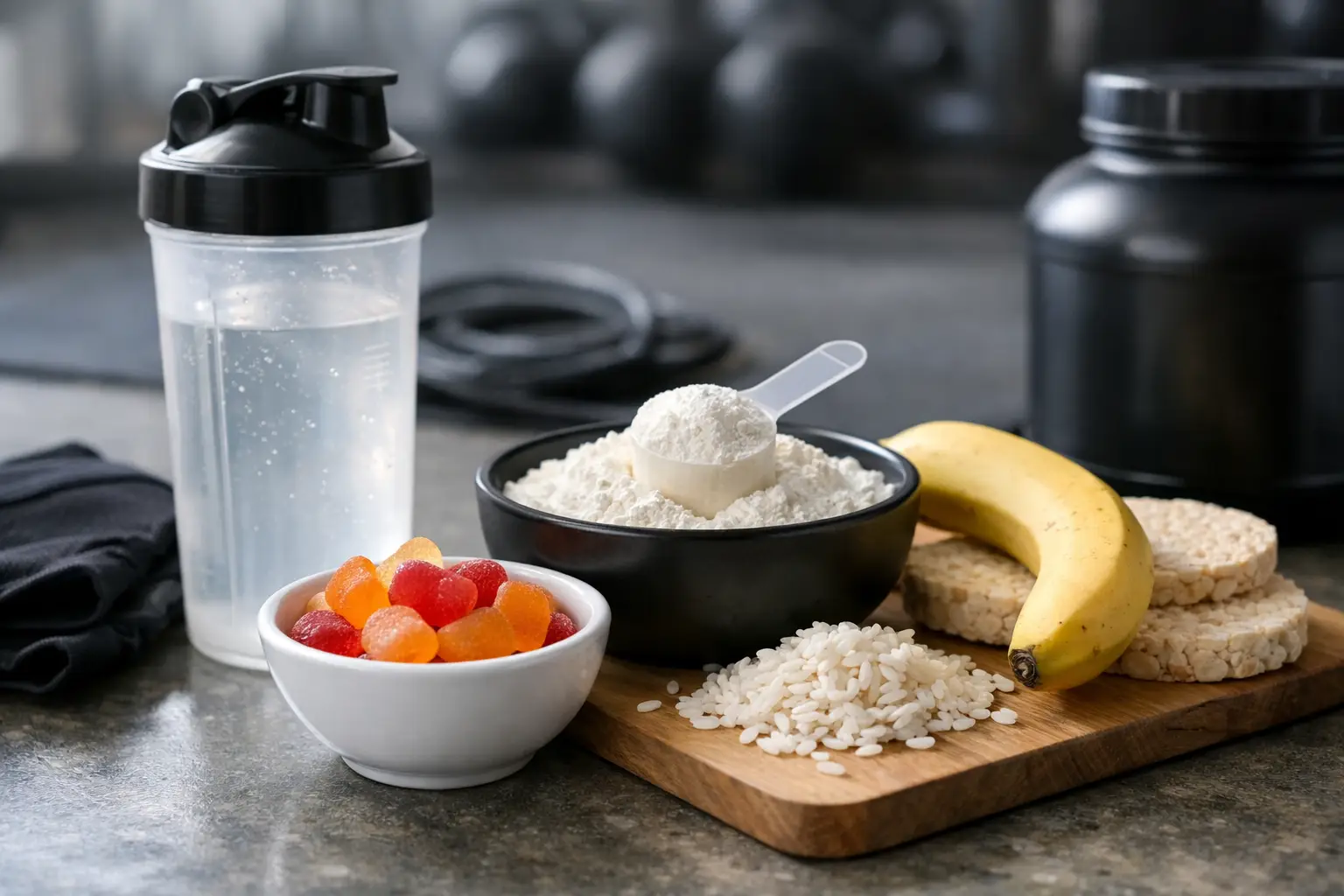
How to Choose Intra Workout Carbs
Halfway through a hard leg session is the worst time to realise your energy has fallen off a cliff. If you are wondering how to choose intra workout carbs, the answer is not just “more sugar”. The right carb source depends on how you train, how long you train for, how hard you push, and how well your stomach handles liquid nutrition under load.
Intra workout carbs can be a genuine performance tool when they match the session. They help keep output high, support endurance inside longer sessions, and make demanding training feel more repeatable from set one to the final round. But they are not mandatory for everyone, and choosing badly can leave you bloated, flat or spending more than you need to.
Who actually needs intra workout carbs?
If your sessions are short, low volume and over in 45 minutes, you may not need them at all – especially if you have eaten properly beforehand. Someone doing a brisk upper-body workout after a solid meal will usually get more from good pre-workout nutrition than from sipping carbs during training.
Where intra carbs start to make more sense is in longer or more glycogen-demanding sessions. Think bodybuilding workouts with lots of volume, hard leg days, long conditioning sessions, team sport training, combat sport work, CrossFit-style mixed training, or any session that runs beyond an hour and stays intense. Fasted morning trainers can also benefit, as can athletes training twice a day and trying to recover quickly between sessions.
That matters because the first step in choosing intra workout carbs is deciding whether you need them in the first place. If the session does not justify them, save the money and keep it simple.
How to choose intra workout carbs for your goal
Most people buy intra carbs for one of three reasons: more energy, better endurance in-session, or better performance across high-volume work. Your goal affects the formula you should look for.
If you want steady energy and strong training output, fast-digesting carbs are usually the best fit. These are designed to move through the stomach quickly and provide usable fuel without feeling heavy. If you want to maximise performance in longer sessions, carb blends can work well because they use different transport pathways and can be easier to tolerate at higher intakes.
If your main focus is muscle fullness and getting through pump work without fading, a moderate dose is often enough. You do not always need an aggressive carb load. More is not automatically better, particularly if the session is under 75 minutes.
For cutting phases, the decision becomes more individual. Some lifters keep intra carbs in because performance drops quickly in a calorie deficit. Others would rather save those calories for meals. If intra carbs help you train harder and preserve strength while dieting, they can still earn their place.
The main types of intra workout carbs
Not all carbs behave the same once they hit your bottle. The ingredient label matters.
Dextrose and glucose are simple, fast carbs. They are cheap, effective and widely used, but they can feel quite sweet and may upset some stomachs at higher doses. Cyclic dextrin-style carbs are popular because they are known for fast gastric emptying and a lighter feel during training. Maltodextrin is another common option – practical, affordable and easy to mix into stacks, though tolerance varies from person to person.
You will also see cluster-style carb products, highly branched cyclic dextrin products, and blends that combine multiple sources. For harder or longer training, these can be useful because they often deliver more carbs with less stomach drag than basic sugars alone.
Fruit juice powders and lower-cost carb formulas can still do the job, but they are usually less refined for performance use. If you are pushing heavy sessions and want something built for training rather than general calories, more specialised intra carbs often justify the step up.
What to look for on the label
The best intra workout carb is one you can actually train on. That means label reading matters more than flashy claims.
Start with the carb source. A product built around fast-digesting, easy-mixing carbohydrates is generally a stronger choice than one padded with extras that do not improve training. Then check serving size. Some products look impressive until you realise half the scoop is flavouring or filler.
Electrolytes are a useful bonus, especially sodium and potassium. If you sweat heavily, train in warm gyms, or combine carbs with pump products and stimulants, hydration support can make a noticeable difference. Some formulas also add taurine, amino acids or performance ingredients. That can be helpful, but only if it does not distract from the main job – delivering carbs effectively.
Be careful with products that throw in too much of everything. A loaded formula might sound better on paper, but if it becomes expensive, overcomplicated or harder to digest, it misses the point.
Dosage depends on session length and intensity
This is where a lot of people go wrong. They copy a high-level athlete’s carb intake for a standard gym session and wonder why they feel rough.
For many gym-goers, 15-30g of intra workout carbs is enough for a productive session. That range suits moderate to hard resistance training where you want support without overdoing it. For longer, more demanding sessions, 30-60g can make sense. Endurance athletes or very high-output trainers may use even more, but that is a different category and usually needs practice.
The key is matching intake to demand. A heavy push session with 18 working sets is not the same as a two-hour football session or a long mixed conditioning piece. If the work rate is high and the duration stretches on, carb needs rise. If not, keep it tighter.
Start lower, assess energy, pumps, and stomach comfort, then adjust. Performance nutrition works best when it is built around your actual sessions, not someone else’s social media routine.
Stomach comfort is a performance factor
If your intra drink sits like a brick, it is the wrong product no matter how good the ingredient panel looks.
Some people handle simple sugars well. Others feel better with cyclic dextrin-type products. Concentration matters too. A reasonable carb dose in too little water can turn a decent formula into a thick, overly sweet drink that is hard to get down mid-session.
If you are new to intra carbs, avoid stacking everything at once. A high-stim pre-workout, pump formula, EAAs, creatine, electrolytes and a full carb dose can create a bottle that looks serious but trains terribly. Build from the basics. Add carbs, get the water right, then layer in other products only if they improve the session.
Timing still matters
Intra workout carbs work best when they are used properly. You do not need to wait until you are flat and exhausted to start drinking them.
Most people do well starting early in the session and sipping consistently throughout. That creates a steadier supply of fuel than smashing the whole bottle after 40 minutes. If you train fasted, starting sooner matters even more. If you had a solid pre-workout meal 60-90 minutes before training, you may only need a smaller intra dose or none at all.
Pre, intra and post-workout nutrition all overlap. If your pre-workout meal is nailed, your need for intra carbs may fall. If your schedule is messy and meals are inconsistent, a good intra carb product can help cover the gap.
Common mistakes when choosing intra workout carbs
The biggest mistake is buying for hype instead of use case. Not every session needs a premium carb formula, and not every lifter needs a huge serving. Another common error is ignoring total daily intake. Intra carbs still count towards your calories and macros, so they should fit the bigger plan.
People also confuse pumps with performance. A product that makes you look fuller in the mirror is not always the one that best supports output across the whole session. Both can matter, but they are not identical.
Then there is flavour fatigue. If a product is too sickly, you will stop using it. The best choice is one that performs well enough and is easy to drink week after week.
The smart way to choose
If you want a straightforward answer to how to choose intra workout carbs, use this filter: train long enough to need them, pick a fast-digesting source, choose a dose that matches the session, and prioritise digestion over marketing noise. That is what separates a useful intra from an expensive bottle of guesswork.
For most serious gym users, the sweet spot is a well-formulated carb product with solid mixability, a sensible serving size and optional electrolytes. If you are deep into hard training blocks, cutting while trying to hold performance, or chasing better output across high-volume sessions, intra carbs can be one of the cleaner upgrades in your stack. SUPPS101 shoppers usually know that results come from matching products to purpose, not buying the loudest label.
Choose for the session in front of you, not the one you wish you were doing, and your bottle will start working as hard as you do.
About author

Add comment