
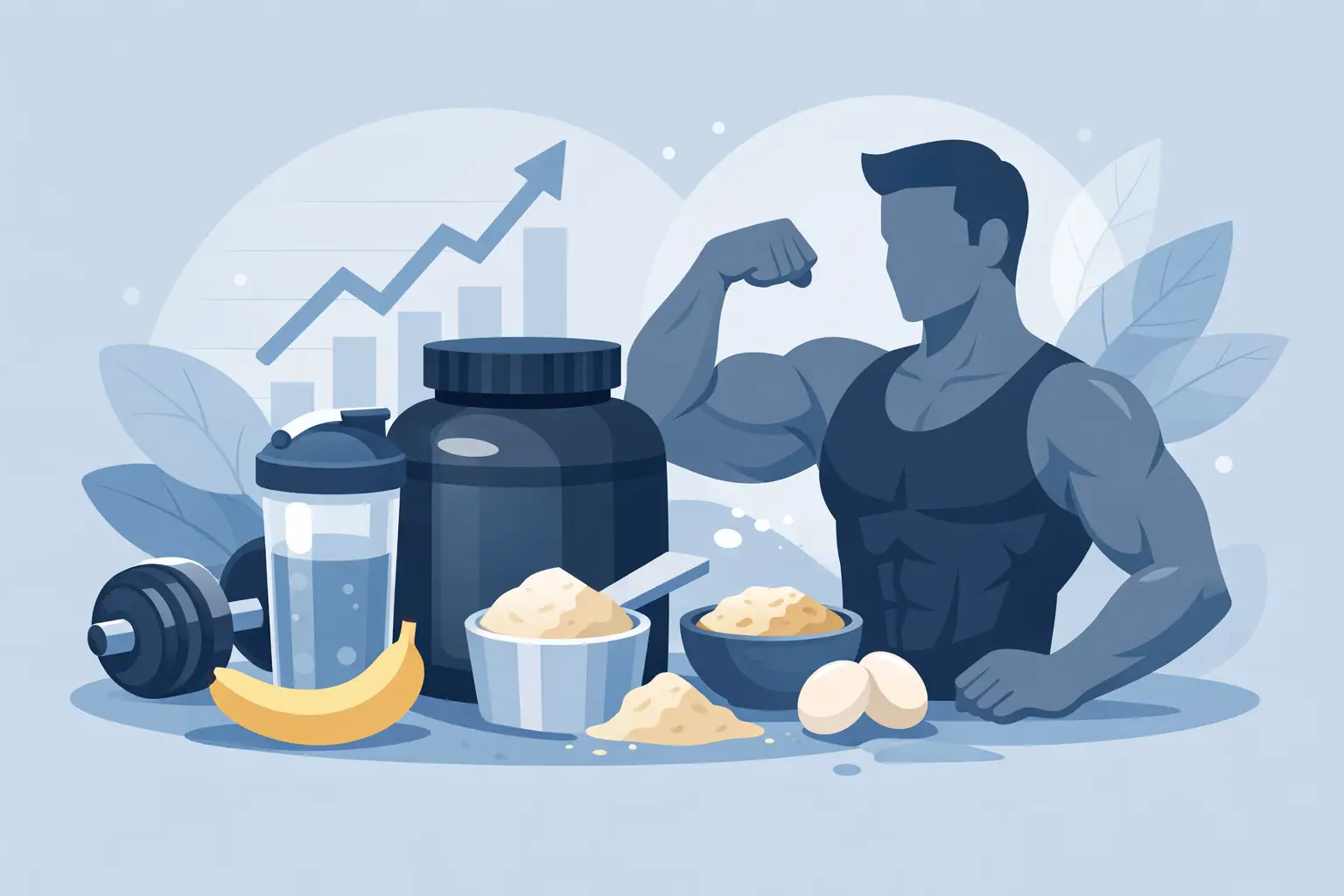
Best Whey Protein for Muscle Gain
You can train hard, hit your numbers and still stall if your protein choice is off. The best whey protein for muscle gain is not simply the one with the flashiest label or the biggest tub – it is the one that fits your calorie target, digestion, budget and training volume well enough that you will use it consistently.
That matters because whey is one of the easiest ways to keep daily protein high without forcing down endless extra meals. It is fast, convenient and rich in essential amino acids, especially leucine, which plays a central role in triggering muscle protein synthesis. But not every whey product suits every lifter, and the right pick depends on what sort of muscle-gain phase you are in.
What actually makes a whey protein good for muscle gain?
Muscle gain is not built on protein alone. You need hard training, enough total calories, recovery and time. Whey helps by making one part of that equation easier – getting enough high-quality protein in every day.
A good whey product for growth should first give you enough protein per serving to make a dent in your target. For most gym-goers, that means roughly 20g to 30g per shake. You also want a complete amino acid profile, sensible ingredient quality and a macro split that makes sense for your goal. If you are in a lean bulk, lower sugar and fat may matter more. If you struggle to eat enough, a slightly higher-calorie option can work in your favour.
This is where people get caught out. They chase the “cleanest” formula possible, then realise it is expensive, hard to stick with and not actually better for their specific setup. The best option is the one that helps you hit your total intake day after day.
Best whey protein for muscle gain – which type should you choose?
There is no single winner for everyone. Whey concentrate, whey isolate and whey blends all have a place, and each comes with trade-offs.
Whey concentrate
For many lifters, concentrate is the sweet spot. It usually offers strong protein content, better value per serving and a creamier taste than leaner formulas. If your digestion is good and you are not overly strict on every gram of carbs and fats, concentrate is often the most practical choice for building size.
It is especially useful during a standard gaining phase where total calories matter. The slight extra lactose, carbs and fats are rarely a problem unless you are very sensitive or dieting tightly.
Whey isolate
Isolate is filtered further, so it tends to come with a higher protein percentage and lower carbs, fats and lactose. If you want a leaner shake, digest concentrate poorly or simply prefer a cleaner macro profile, isolate makes sense.
For muscle gain, isolate is not automatically more anabolic than concentrate. The advantage is really about digestion and macro control. If a standard whey leaves you bloated, isolate can be the difference between using protein consistently and skipping it.
Whey blends
Blends combine different forms of whey, and sometimes other proteins as well. These are popular because they can balance texture, taste, price and protein yield. A good blend often gives you better all-round usability than a very stripped-back isolate.
For shoppers who want one tub that works post-workout, between meals and on busy days, a blend is often a strong retail pick.
How much protein should your shake actually provide?
A lot of products look impressive until you check the label properly. For muscle gain, a shake with around 20g to 25g protein can be enough for many people, but larger athletes or those using whey to replace a full feeding may want closer to 30g.
The bigger point is daily intake. If your target is around 1.6g to 2.2g of protein per kilo of bodyweight, your whey should help close the gap between what you eat and what you need. It does not need to do the whole job. If your meals are already high in protein, a simple one-scoop product may be perfect. If your food intake is inconsistent, a higher-protein serving becomes more useful.
Do not confuse a bigger scoop with a better product either. Some oversized servings are padded with flavouring, thickeners or extra carbs. What matters is the actual protein content per serving and how much of the powder is genuinely there to support your goal.
What to look for on the label
If you want to buy smarter, read the panel before the branding. Start with protein per serving, then check how that compares with the scoop size. A 30g scoop delivering 24g of protein is generally solid. If a much larger scoop gives only a modest amount more, you are paying for filler, flavour bulk or unnecessary extras.
Then look at carbs and fats. Neither is bad for muscle gain, but they should fit the product type. A concentrate can reasonably carry a bit more of both. An isolate should be tighter. If sugar is high and protein is only average, it may be less of a pure whey product and more of a casual shake.
Ingredient order matters too. Whey protein should be near the front, not buried behind cheap add-ins. Digestive enzymes can be a nice extra for some users, but they are not magic. The same goes for bonus amino acids. If the core whey is underdosed, a few sprinkled extras will not rescue it.
Best whey protein for muscle gain if you are bulking hard
If you are in a proper size phase and appetite is not huge, convenience matters as much as purity. In that case, a whey concentrate or a quality blend is often the better move than a premium isolate. You get strong protein delivery, good flavour and usually better value, which makes repeat buying easier.
This is also where context matters. If you are adding whey into oats, smoothies or high-calorie shakes, the tiny difference in carbs between concentrate and isolate is usually irrelevant. What matters is that the powder mixes well, tastes decent and does not wreck your stomach.
If you need even more calories, standard whey may not be enough on its own. That is when mass gainers or adding carbs and nut butter around your whey can be more effective than just forcing extra scoops.
Best whey protein for lean muscle gain
If the goal is adding quality size while keeping fat gain under control, isolate becomes more attractive. It gives you more precision with your macros and keeps protein intake high without pushing calories up too quickly.
This is useful for athletes, people in a slow surplus and anyone who wants a cleaner shake around training. A leaner whey also sits well in tighter meal plans where every calorie is being tracked.
That said, lean gaining does not require suffering through bland shakes. If a blend or concentrate helps you stay consistent and still fits your numbers, it can still be the better buy.
When should you take whey for muscle gain?
Post-workout is the obvious slot because it is convenient and easy to repeat. After training, whey gives you a quick protein hit when appetite is often low and time is tight.
But timing is not the main driver of growth. Total daily intake wins. If your post-workout meal is already sorted, use whey at breakfast, between meals or whenever your protein is falling short. For many busy lifters, that practical role is why whey works so well.
A simple rule is this: use whey where real food becomes inconvenient. That might be after a session, at work, in the car, or during a packed day when cooking is not happening.
Common mistakes when buying whey
The first is buying purely on hype. Big claims about size, strength and recovery mean very little if the formula is average. The second is buying the cheapest tub without checking cost per serving and actual protein yield. Low headline price can be poor value if servings are weak.
Another mistake is choosing a formula your digestion hates. If whey concentrate leaves you bloated, gassy or reluctant to use it, switch to isolate or a better blend. A technically perfect product that you avoid is not helping your muscle gain.
Flavour matters more than people like to admit as well. If you dread drinking it, compliance drops. Serious supplementation is about repeatable habits, not forcing down miserable shakes for two weeks and quitting.
How to make the right choice faster
Start with your goal, then match the product. If you want affordable daily protein for a bulk, look at whey concentrate first. If you want leaner macros or easier digestion, go for isolate. If you want a balance of taste, value and performance, a whey blend is often the most versatile option.
Then check serving size, protein yield, flavour options and how often you realistically plan to use it. A product that fits your routine will outperform one that only looks good on paper. For shoppers comparing multiple brands at once, that is usually the fastest way to narrow the field.
At SUPPS101, that is also why category depth matters. The right whey is not always the most expensive or the most stripped back – it is the one that matches how you train, eat and recover.
If your training is on point, whey should make muscle gain easier, not more complicated. Choose the product you will actually use, hit your intake with intent, and let your sessions do the talking.
About author

Add comment